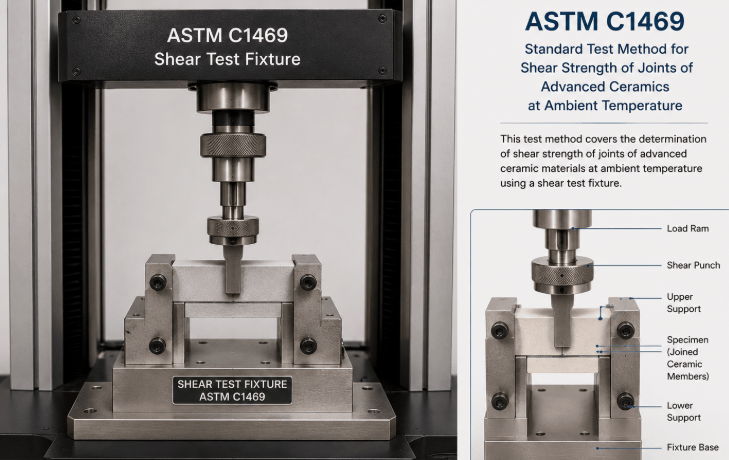
ASTM C1469 is a standard method for measuring joint shear strength of advanced ceramics at ambient temperatures. The method assesses the mechanical properties of joined ceramic components, compares joining processes, and provides data for quality control, material qualification, and engineering.
- Discusses shear strength testing of advanced ceramic joints.
- Assesses ceramic-to-ceramic and ceramic-to-other-material joints.
- Determines shear strength of soil in a manner that applies controlled loading.
- Compares joining methods.
- Supports material qualification and quality assurance.
- Standardizes the procedures for testing structural ceramic joints.
What are the Uses of ASTM C1469 Testing?
Engineers use ASTM C1469 testing to determine the shear strength of joints in advanced ceramic components at ambient temperature. This test assesses the mechanical integrity of ceramic-bonded or joined assemblies, qualifies joining processes, and determines reliable performance in structural applications.
- Determines the shear strength of joints in advanced ceramics using controlled loading.
- Judges the quality of ceramic bonding and joining processes.
- Assists in product development and material qualification.
- Helps with quality control in the manufacturing of ceramics.
- Compares the performance of different joining techniques.
- Tests the bonding ability of ceramic assemblies.
- Facilitates the process of engineering design and reliability evaluation.
Which materials can be tested using ASTM C1469?
ASTM C1469 applies to joints in advanced ceramics, including joints in advanced ceramic matrix composites and potentially monolithic advanced ceramics.
Why is ASTM C1469 Important?
ASTM C1469 is a standardized test method to measure the shear strength of advanced ceramic joints at ambient temperature. It can support manufacturers in analyzing the performance of the joint, comparing various joining processes and optimizing the manufacturing process, and providing manufacturers with the data for engineering design.
Common Challenges and Troubleshooting
Correct preparation of joints, positioning of fixtures, and precise control of loading conditions are important to ensure accurate measurement of shear strength. Common problems include misalignment of the component, differences in joint thickness, damage by the cutting tools and the presence of residual stresses after the joining process, and fixture slippage. Reliable and repeatable results are obtained through careful specimen preparation, accurate alignment and calibration of the testing equipment.
ASTM C1469 Testing Process and Data Collection
Technicians prepare representative joined ceramic specimens with the geometry and dimensions required by ASTM C1469. The technician places the specimen in the appropriate test fixture mounted on the universal testing machine. The technician progressively applies the specified loading until the specimen fails. The laboratory measures the size of specimens, joint geometry, maximum load, failure load, fracture location, and failure type during the test. Engineers use these data to determine the shear strength of the joint and evaluate the joining process.