
ASTM C1217 gives guidance on the design of equipment for nuclear and radioactive materials processing facilities. This guide accentuates the protection of personnel, prevention of contamination, reliability of equipment, and ease of maintenance during the equipment’s service life. This guide is an aid to manufacturers, engineers, and operators of nuclear facilities in the design of process equipment for fuel fabrication, radioactive waste treatment, radiochemical laboratories, and nuclear research facilities. In addition to helping meet regulatory requirements, complying with ASTM C1217 (Standard Guide for Design of Equipment for Processing Nuclear and Radioactive Materials) increases operational safety and efficiency of plant operations.
ASTM C1217 Design of Equipment for Processing Nuclear and Radioactive Materials
What is ASTM C1217?
What is the scope of ASTM C1217?
ASTM C1217 provides engineering guidance on the safe processing, handling, and containment of nuclear and radioactive materials. The guide emphasizes enhancing operational safety, reducing radioactive contamination, simplifying maintenance, and assuring reliable performance of the equipment during its service life. This standard guide-
- Offers design advice on equipment for nuclear and radioactive materials processing. Maintains safe handling, containment, and transfer of radioactive materials.
- Recognizes the radiation shielding and contamination control needs.
- Makes equipment accessible for inspection, maintenance, and decontamination.
- Helps engineers to choose appropriate construction materials for radioactive environments.
- Assists in conforming to engineering and safety practices at nuclear facilities.
What is the use of ASTM C1217 in nuclear equipment design?
Engineers can use ASTM C1217 to design processing equipment that is safe to use with radioactive materials and minimize operational risks. Equipment manufacturers, nuclear plants, and engineering firms use the guide to develop safe and effective systems. The ASTM C1217 document-
- Provides guidance for designing equipment used in nuclear fuel processing facilities.
- Promotes the implementation of radioactive waste treatment and storage facilities.
- Ensures improved contamination control when handling radioactive material.
- Assists engineers in the design of equipment to make maintenance and decontamination easier.
- Supplies manufacturers with information on the appropriate materials for radioactive service.
- Assists in meeting regulatory requirements and engineering quality assurance at nuclear facilities.
What is Nuclear Processing Equipment?
Nuclear processing equipment refers to equipment used for the safe handling, processing, storage, or transportation of radioactive materials. Some examples are glove boxes, hot cells, process vessels, piping, storage tanks, and remote handling. ASTM C1217 offers guidance for the design of this equipment to ensure it is safe, reliable, and maintainable.
Why is ASTM C1217 Important for Nuclear Facility Design?
Equipment employed in nuclear facilities must function safely, with low radiation doses and low radioactive contamination. ASTM C1217 provides design guidelines to ensure that designers consider shielding, contamination control, and maintenance when designing processing equipment.
What Equipment Does ASTM C1217 Cover?
ASTM C1217 covers a broad range of equipment used in many stages of the nuclear fuel cycle and in radioactive material processing plants. The guide assists in designing equipment to safely contain and move radioactive material, including hot cells, process vessels and tanks, piping and transfer systems, filtration equipment, storage containers, remote handling systems, and radioactive waste processing equipment.
How Does ASTM C1217 Improve Radiation Safety?
ASTM C1217 highlights equipment designs that minimize exposure to radiation and the dispersal of radioactive contamination. It suggests suitable shielding, leak control, remote operation if applicable, and equipment layouts that will facilitate maintenance and decontamination. These factors help to ensure employee safety and efficiency.
Common Challenges and Design Considerations
The design of equipment used in radioactive services involves several engineering problems. Design complexity can increase due to high radiation levels, corrosive process chemicals, limited maintenance access, and contamination control requirements. When dealing with these problems, engineers choose materials that can be used together, design sufficient shielding, include maintenance access points at a distance, and make a thorough safety examination before fabrication.
ASTM C1217 Design Process and Documentation
Engineers start by defining the process requirements, operating conditions, and radioactive materials. They then create equipment layouts, conduct structural analysis and shielding analysis, and assess features associated with contamination control. Engineers design and analyze for safety and maintenance requirements and create detailed drawings, design calculations, and supporting documentation for fabrication and regulatory review.
Get Certified ASTM C1217 Design Review for Safe Nuclear Processing Equipment
Design reviews are used to ensure processing equipment includes suitable protection, contamination control, maintainability, and operational safety. Independent engineering evaluations also mitigate design risks, increase equipment reliability, and help meet industry requirements and customer requirements.
ASTM C1217 Equipment and Design Considerations Guide
ASTM C1217 is a design criteria document; however, it requires the use of suitable engineering tools and equipment for successful implementation. Engineers consider operating conditions, radiation exposure, material compatibility, and maintenance requirements during the final equipment design.
| Equipment Covered | Process vessels, glove boxes, hot cells, piping systems, storage tanks, mixers, transfer systems, filters, and remote handling equipment used for radioactive materials. |
| Design Preparation | Define process conditions, radiation levels, chemical compatibility, operating pressure, temperature, and maintenance requirements before equipment design begins. |
| Design Requirements | Minimize contamination, provide easy decontamination, provide adequate shielding, and ensure safe operation and maintenance. |
Design Requirements and Guidelines
ASTM C1217 is a standard guide offering engineering and design principles for equipment used to process nuclear and radioactive materials. Before an equipment layout is approved for fabrication and installation, engineers consider various equipment layout factors such as material compatibility, shielding considerations, maintenance accessibility, and contamination control.
Major referenced standards include ASTM C1009, ASTM C996, and ASTM C1458.
| Process Requirement Review | Determine operating conditions, radioactive materials, and process requirements. |
| Equipment Design Evaluation | Confirm the structural integrity, material compatibility, and operational performance. |
| Radiation Shielding Assessment | Analyze the shielding needs for minimizing radiation exposure. |
| Contamination Control Review | Minimize and simplify radioactive contamination and decontamination features. |
| Maintenance Accessibility | Provide access for inspection, maintenance, and replacement of equipment. |
| Design Documentation | Make engineering designs, safety analyses, operating requirements, inspection records, etc. |
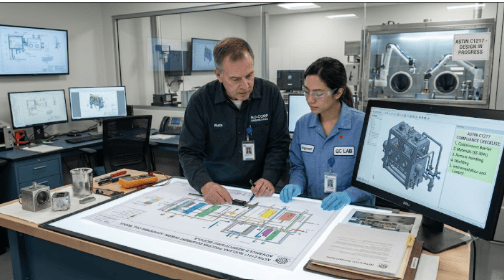
Analysis Results and Interpretation
- Checks and verifies the design of equipment against the function and safety requirements.
- Confirms that radiation protection is carried out in accordance with the criteria.
- Assesses contamination control and leak prevention aspects.
- Evaluates access for inspection, maintenance, and decontamination.
- Evaluates compatibility of material with radioactive chemicals and process chemicals.
- Supports engineering approval before fabrication and installation of equipment.
Updated on July 29, 2026

Testimonials
Real results
Engineers trust us with what matters most
“We had a great experience working with this company for our ASTM E84 testing. They were the first company to respond to our inquiry within just a few minutes of submitting it. From start to finish, the communication was excellent, and the entire process was swift, straightforward, and hassle-free.”

“Very good communication, testing associates were very patient with delays on our end. Reasonable turnaround time for results and nicely detailed report. Analysts were also quick to answer any follow-up questions. Happy with results.”
“Matestlab connected us with an accredited lab within days, cutting weeks off our product validation timeline.”
Start Your Testing
Project Today
Project Today
Define your requirements and get access to
specialized laboratories ready to deliver results
specialized laboratories ready to deliver results
Start Testing
Partners with us
Clients
Vendors