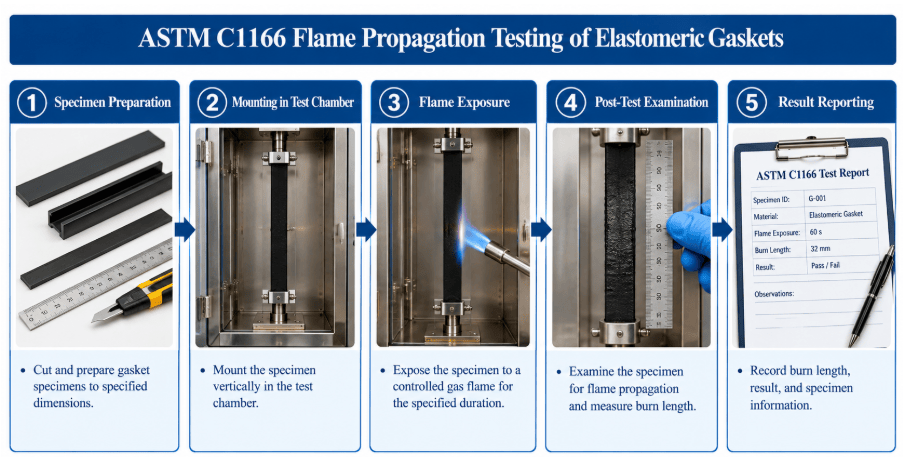
ASTM C1166 is a laboratory test method that specifies the procedures for determining the flame propagation properties of gaskets and accessories made of dense and cellular elastomers. It describes specimens exposed to a controlled flame source for specified periods of time and records the distance the flame traveled along the surface. ASTM C1166 is intended to provide a method for differentiating the flame propagation performance of elastomeric compounds under a specified laboratory exposure condition, rather than to evaluate the fire hazard or fire risk of a finished product or assembly. The scope of ASTM C1166 includes-
- Material type: Dense and cellular elastomeric gaskets and accessories, such as expansion, lock-strip, and compression gaskets, along with setting blocks, spacers, and shims.
- Purpose: To assess the characteristics of flame propagation for material selection and comparison.
Properties evaluated: Distance over which the flame travels along the specimen surface under controlled flame exposure. - Testing method: Specimens are exposed to a Bunsen burner flame for a specified time, and the flame propagation distance is measured and calculated.
- Results: Results are reported as flame propagation (FP) in SI units, based on the average reduction in reference measurement points.
- Test limitations: ASTM C1166 measures flame propagation only under the described laboratory exposure condition; it does not appraise fire hazard or fire risk under actual fire conditions.
- Environmental conditions: Laboratory-controlled conditions simulating specific fire exposure.
- Applications: Building seal and gasket evaluation, transportation and railway vehicle sealing components, material development, and quality control.
What are the Uses of ASTM C1166 Testing?
It is a standard for the elastomeric gasket and accessory industry for fire performance. It provides gaskets, setting blocks, spacers, and shims with known burning rates before installation in a sealing system. This is important for construction, transportation, and industrial manufacturing companies. The test method-
- Establishes flame propagation testing requirements for elastomeric gaskets and accessories.
- Recognizes how different compound formulations propagate a fire.
- Tests gasket and accessory performance using a defined flame exposure test method.
- Evaluates the distance of flame propagation on specific reference points.
- Reviews certain product hazards associated with surface flame spread.
- Understands the application of engineering judgment in material selection.
- Facilitates fire-risk assessment with other relevant assessment considerations.
What Materials Can Be Tested Under ASTM C1166?
ASTM C1166 applies to dense and cellular elastomeric gaskets, seals, and insulating accessories for fire-resistant applications, such as silicone, neoprene, and EPDM rubbers and their cellular forms, in safety-sensitive environments such as sealed electrical panels and thermal barriers.
Why is ASTM C1166 Important?
By standardizing flame-propagation testing, the standard ensures safety and reliability of elastomeric gaskets and accessories used in fire critical applications, improving safety and protecting against catastrophic failure in fire prone systems. This standard will enhance confidence in choosing materials and offer a level playing field for comparing compounds from various manufacturers.