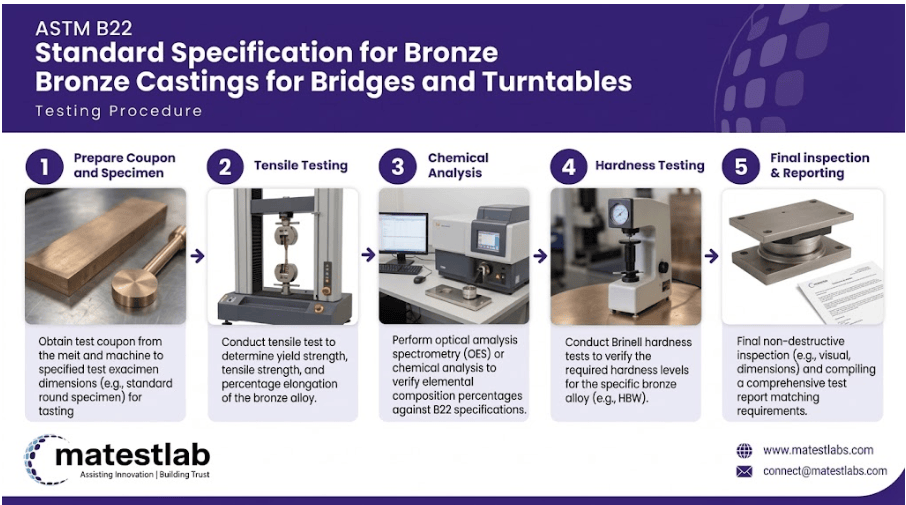
ASTM B22 specifies the chemical composition limits, tensile requirements, compressive strength requirements, and quality control specifications for copper alloy sand castings and continuous castings for use in bridge and turntable construction. The main uses of ASTM B22 are to confirm alloy composition, monitor quality control during foundry operations, and verify the necessary compressive strength of bronze bearing plates and expansion shoes for heavy civil engineering projects.
The scope of ASTM B22 includes:
- Material type: Copper-alloy bronze castings, Copper alloy UNS Nos. C86300, C90500, C91100, C91300, and C93700.
- Purpose: To establish mandatory compositional, physical, and mechanical property requirements for copper alloy castings to ensure structural reliability under high static and dynamic compressive loads.
- Elements analyzed: Chemical composition (copper, tin, lead, zinc, iron, manganese, aluminum) and mechanical properties (tensile strength, yield strength, elongation, compressive strength, and deformation limit).
- Method: Chemical analysis by spark-OES or wet chemistry as per applicable ASTM standard practices and mechanical testing by tension and compression testing of cast test coupons.
- Result: Determination of chemical constituent percentages and mechanical test values compared with alloy limits.
- Test Limitations: Applies to raw casting properties and does not otherwise apply to full non-destructive testing (e.g., ultrasonic or radiographic examination) unless as purchased.
- Environmental conditions: Mechanical testing is carried out under standard ambient conditions in the laboratory (approximately 23 °C ± 5 °C ) with specimens prepared in an appropriate manner.
- Applications: Highway bridge expansion bearings, railroad turntable center bearings, trunnion bearings, shear keys, and heavy structural thrust washers.
What are the Uses of the ASTM B22 Specification?
The implementation of ASTM B22 helps the foundry metallurgist and the structural engineer to quickly verify the performance of a copper alloy for use, or for routine melt quality control or certification of materials by third parties. Furthermore, the standardized specification allows for the repetition of casting alloys between foundries and project sites. This standard:
- Aids in quality control of bronze sand casting and continuous casting.
- Computes load-bearing structural engineering calculations.
- Provides data to confirm alloy selection for anticipated compression forces and wear.
- Checks material requirements for minimum yield strength, tensile strength, and hardness.
- Helps to resolve component wear or cracking problems before they occur in the field.
What Materials Can Be Tested Under ASTM B22?
ASTM B22 is for heavy-duty copper-alloy castings. ASTM B22 is the standard for various materials, including high-strength manganese bronze (UNS C86300), tin bronze (UNS C90500), high-tin phosphor bronze (UNS C91100 and C91300), and high-leaded tin bronze (UNS C93700) cast into bearing plates, bushings, expansion shoes, and turntable disks.
Why is ASTM B22 Important?
ASTM B22 offers a standardized quality system for foundries and engineers to ensure that the casting is suitable for the application before it is put into service. Inadequate alloy selection or casting quality can lead to early galling, excessive deformation, bearing seizure, and structural failure under heavy traffic on the bridge. If impurity concentrations are not within the prescribed limits, they reduce the material’s ductility and can lead to brittle fracture under shock loading. ASTM B22 specifications ensure a bridge’s long-term serviceability without costly structural repairs and optimum metallurgical quality.