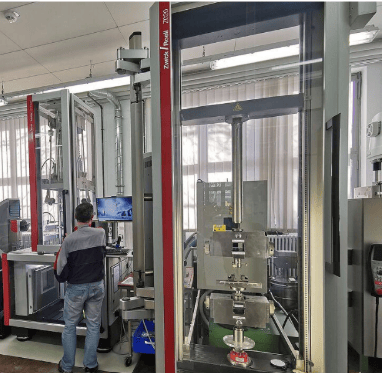
ASTM A1108 is a standard method of testing the ultimate strength of a bolted longitudinal lapped seam in deep corrugated structural plates. The standard provides a uniform process for assessing the performance of a seam when subjected to tensile load, and it offers quality assurance of structural plate systems.
- Determines the ultimate strength of bolted longitudinal lapped seams.
- Applies to deep corrugated structural steel plate assemblies.
- Evaluates structural connection performance under tensile loading.
- Supports product qualification and manufacturing quality control.
- Used for structural design verification and infrastructure projects.
- Provides standardized laboratory procedures for determining the ultimate strength of bolted longitudinal lapped seams.
What is the Use of ASTM A1108 Testing?
ASTM A1108 testing helps manufacturers, engineers, and infrastructure agencies verify the structural strength of bolted seam connections in deep corrugated structural plates. The results support product qualification, quality assurance, and the safe design of buried and above-ground structural plate systems. Common applications include:
- ASTM A1108 testing evaluates the load-carrying capacity and structural performance of bolted longitudinal lapped seams under tensile loading.
- Manufacturers use this test to qualify new deep corrugated structural plate products before commercial production.
- Quality control laboratories perform ASTM A1108 testing to ensure consistent bolt connection performance across production batches.
- Civil engineers use the results to validate structural designs for buried bridges, culverts, tunnels, and stormwater drainage systems.
- Transportation agencies require ASTM A1108 testing to evaluate structural plate systems used in highway and railway infrastructure.
- Research organizations use the test to study improved bolted connection designs, corrugation profiles, and fastening systems.
- Independent laboratories perform ASTM A1108 testing to support product certification and compliance with engineering specifications.
What Materials Can Be Tested Under ASTM A1108?
ASTM A1108 is intended for deep corrugated structural steel plates assembled with bolted longitudinal lapped seams. Typical materials include galvanized structural steel plates, aluminized steel plates, corrosion-resistant-coated structural plates, high-strength structural steel corrugated plates, and complete bolted-seam assemblies used in highway culverts, railway crossings, buried bridges, stormwater drainage systems, utility tunnels, mining structures, and underground infrastructure.
Why is Ultimate Seam Strength Important?
The longitudinal bolted seam is one of the most critical load-bearing connections in deep corrugated structural plate systems. It must safely transfer tensile forces throughout the structure without excessive deformation or premature failure. ASTM A1108 testing ensures that bolted seam assemblies meet the required strength requirements to support structural safety, durability, and long-term performance.
Common Challenges and Troubleshooting
Common issues that occur during testing include: incorrect bolt tightening, misaligned specimens, inconsistent overlap dimensions, damaged bolt holes, and inaccurate load measurement. Accurately and repeatably producing test results depends on well-made specimens, calibration of test equipment, proper bolt installation, and skilled laboratory personnel.
ASTM A1108 Testing Process and Data Collection
Testing starts with the fabrication of representative corrugated structural plates with the designated bolted longitudinal lap configuration. The specimen is mounted in a calibrated universal testing machine and subjected to a continuously increasing tensile load until failure. Technicians record the applied load, displacement, and failure behavior throughout the test. The test report also includes specimen identification, plate geometry, bolt size and arrangement, loading rate, test date, and laboratory identification to ensure traceability.