
ASTM A109 Specification for Steel, Strip, Carbon (0.25 Maximum Percent), Cold-Rolled
ASTM A109 specifies requirements for cold-rolled carbon steel strip supplied in coils or cut lengths, with tighter tolerances than those for standard cold-rolled steel sheet. This specification checks the dimensional accuracy, surface finish, temper, and mechanical properties of carbon steel strip products used in manufacturing and automotive applications. The specification includes hardness, bend performance, dimensions, edge condition, and finish quality. Test reports include Rockwell hardness, size measurements, bend test results, and chemical composition data. Manufacturers use ASTM A109 to ensure product consistency, forming, and quality in precision steel products.
Read More
GET STARTED
ASTM A109 Introduction
ASTM A109 (Standard Specification for Steel, Strip, Carbon (0.25 Maximum Percent), Cold-Rolled) defines the characteristics of cold-rolled steel strip, low-carbon and controlled temper, finish, and dimensional tolerances. Industries produce springs, washers, automotive parts, brackets, clamps, electrical parts, and stamped metal products and use ASTM A109. The specification offers advantages to the automotive, construction, and appliance industries where precision, formability, and strength are all crucial. It contributes to quality assurance and standardization, ensuring the performance of steel strips during forming, stamping, and fabrication.
Get Certified ASTM A109 Testing for Reliable Steel Strip Performance
Certification provides that cold-rolled steel strips possess the required hardness, size, and mechanical property standards before industrial applications. Certified testing ensures that the product is of high quality, provides form accuracy, and enhances manufacturing reliability.
Service Name
Remarks
ASTM A109 Testing
Contact US
Testing Procedures and Requirements
First, the staff of technicians prepares representative specimens of steel strip for inspection and testing. Then the laboratory tests dimensions, hardness, edge condition, and surface finish. Technicians also perform bend tests to assess the ductility and forming performance. Finally, test results are matched against the requirements of the specifications in ASTM A109.
This document also contains certain specifications, such as ASTM E18, ASTM A568/A568M, ASTM A682/A682M, and ASTM E290.
Steel manufacturing
Steel manufacturing comprises open-hearth, basic oxygen, or electric furnace processes.
Cold-rolled steel and carbon steel strip manufacturing
Cold reducing a hot-rolled, descaled coil of aluminum with a deoxidizer produces steel.
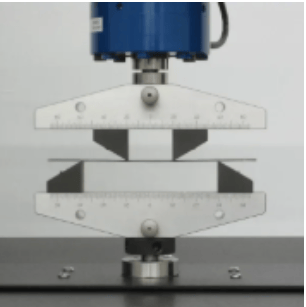
ASTM A109 Bend Testing Fixture
Scope of ASTM A109 Test Standard
Gives the requirements of cold-rolled carbon steel strips.
Determines hardness, finish, and dimension tolerances.
Capable of precision steel manufacturing applications.
Follows coils and cut-length strip products.
Helps with quality control and material checks, such as steel.
ASTM A109 Equipment and Sample Preparation
Specimen Details
Cold-rolled carbon steel strips in coils or cut lengths; coils are sometimes irregular. The strip contains a dull, regular, bright, or fully bright finish.
Specimen size
Maximum carbon content in steel is 0.25%, Width up to 23 15/16 in., and thickness up to 0.300 in.
Use of ASTM A109
Test the quality of cold-rolled steel strips to produce test materials.
Suitable for cars and industrial equipment.
Suitable for automotive and manufacturing uses.
Confirm hardness and dimension tolerances.
Provides quality and quality assurance.
Why are temper and hardness important?
Steel strip temper and hardness determine formability and strength. When bending, stamping, and fabrication operations are performed, the proper hardness yields superior performance.
Common Challenges and Troubleshooting
Techniques suffer from surface scratches, dimensional changes, edge defects, or inaccurate hardness readings. The problems cause poor product quality and poor forming performance. However, controlled rolling operations, calibrated equipment, and proper handling can help improve the accuracy and consistency of test results and manufacturing processes.
ASTM A109 Testing Technique, Process, and Data Collection
The technicians prepare steel strip specimens for dimensional and mechanical tests. The lab then conducts a strip width, thickness, edge condition test, and surface finish test. Technicians perform hardness testing and bend testing to examine temper and ductility. Finally, the inspector records the results before comparing them with the limits of the ASTM A109 specification.
Analysis Results and Interpretation
The ASTM A109 report value is in the Rockwell Hardness B scale (HRB). Measurements are given in inches (in.) or millimeters (mm). The properties of materials accepted include hardness and the bend test. This conforms to dimensions and assures fit and function in precision manufacturing applications. The results help engineers and manufacturers in steel strip stamping and forming, as well as in the approval of industrial steel products.
Factors to Consider for ASTM A109 Testing
Speed: Efficient testing enables faster manufacturing and inspection.
Expertise: Skilled technicians for accurate hardness and dimensional evaluation.
Cost: Optimized testing procedures decrease the production and quality control costs.
Gokula Srinivasan Selvam is a Material Testing Associate at MaTestLab Inc. and holds a postgraduate degree in Ceramic Engineering from IIT (BHU),...
FAQ's
Where can I get the astm a109 tested?
You can share your astm a109 testing requirements with MaTestLab. MaTestLab has a vast network of material testing laboratories, spread across the USA and Canada. We support your all material testing needs ranging from specific astm a109 test to various testing techniques.
How much do I need to pay for the astm a109 test?
Please contact us for a detailed quote for your astm a109 testing needs. Cost incurred to carry out different astm a109 testing methodology depends on the type of raw material; number of samples, coupons, or specimens; test conditions, turn around time etc. Costs of some ASTM testing methods start from $100 and the final value depends upon the factors listed above. Please contact us for the best and latest prices.
How many samples are required for astm a109?
The required number of samples or specimens should comply with the procedure given in the astm a109 standard. However, the MaTestLab operations team can assist you for your special requirements once you share your testing details with us.
How much discount can I get on the astm a109 test?
MaTestLab has a vast testing laboratory network, hence we bring you the best testing facilities in a cost-effective way. We offer considerable discounts (15-20%) to our returning customers based on test volume and frequency.
How many days will it take to complete the astm a109 test?
The turnaround time for astm a109 test methodology depends upon the test procedure mentioned in the standard test document. However, we at MaTestLab understand your research requirements and hence try to get your test completed within the least possible time.
Where can I get the astm a109 tested?
You can share your astm a109 testing requirements with MaTestLab. MaTestLab has a vast network of material testing laboratories, spread across the USA and Canada. We support your all material testing needs ranging from specific astm a109 test to various testing techniques.
MaTestLab Inc. offers accessible, quick, and affordable material testing, product testing, and failure analysis services. We support your on-demand testing and expert consultation needs with the help of our extensive network of material testing laboratories situated in the US and other parts of the world.
MATERIAL TESTING
We offer destructive and non-destructive tests over a range of mechanical, electrical, chemical, thermal, optical, corrosion, radiation, and biological testing methodologies defined by ASTM, ISO and other organizations.
PRODUCT TESTING
We help you evaluate and ensure your product quality and performance with standard and custom-made testing solutions. All the tests are done at well-equipped testing laboratories using standard testing methods for best output and satisfaction.
FAILURE ANALYSIS
Failure analysis ensures high levels of quality in every manufacturing process. We help you with getting the best failure or root cause analysis to determine the cause of the failure. The results help you identify means to prevent failure recurrences.