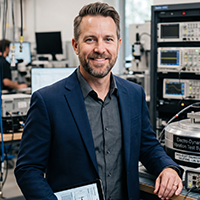
Metal parts used in industries are increasingly demanded to operate in harsh mechanical environments, in severe conditions, and with high safety standards. Conventional metallurgical tests are indispensable, and nowadays, the variety of testing technologies has opened the possibilities of widening the range of material testing and its precision. The developments enable the engineers to have a better insight into the correlation between processing, microstructure, and performance. The development in metallurgical tests is thus crucial in the material development, failure inhibition, and lifecycle management in contemporary industrial sectors.
Integration of Mechanical and Microstructural Testing
More recent metallurgical testing has focused on the joint application of mechanical tests and microstructure analysis to develop an unambiguous structure-property relationship. The tensile, fatigue, and hardness tests are coupled with advanced imaging techniques, which allow the accurate correlation of the grain structure, the phase distribution, and the mechanical performance.
Advanced Non-Destructive Evaluation Techniques
Non-destructive evaluation has enhanced the detection and characterization of defects in metals. Methods like phased array ultrasonic testing and radiography in digital form are also more resolute and reveal more accurate images of the defect as well as improved sizes in defects, making it easier to inspect the components without destruction.
High-Temperature and Environmental Testing
Industrial metals usually undergo intense temperatures and corrosion. High-temperature mechanical testing, creep testing, and corrosion-fatigue testing have been advanced to replicate real service conditions and to pre-determine long-term performance.
Automation and Digitalization in Testing
In the area of metallurgical testing, automation and the use of computer-generated data have enhanced repeatability and efficiency. The computer-controlled testing systems and advanced data analysis tools allow making decisions more quickly and with a great level of traceability during the industrial quality control programmes.
Additive Manufacturing and Novel Materials Testing
Additive production has created new issues in metallurgical evaluation. Special trying out strategies are under improvement to determine anisotropy, layer bonding, and microstructural variability in additively manufactured steel components.
Applications and Industry Use
Higher metallurgical testing finds widespread utility in production, electricity, aerospace, car, and infrastructure industries. These improvements in testing facilitate material qualifications, method optimisation, failure evaluation, and compliance with policies, among others, ensuring that business metallic components are secure and reliable.